
Automatic irrigation: when does it pay off?
Automation feels like a luxury until you add up the cost of water, time and dried-out plants. An honest look at the numbers.
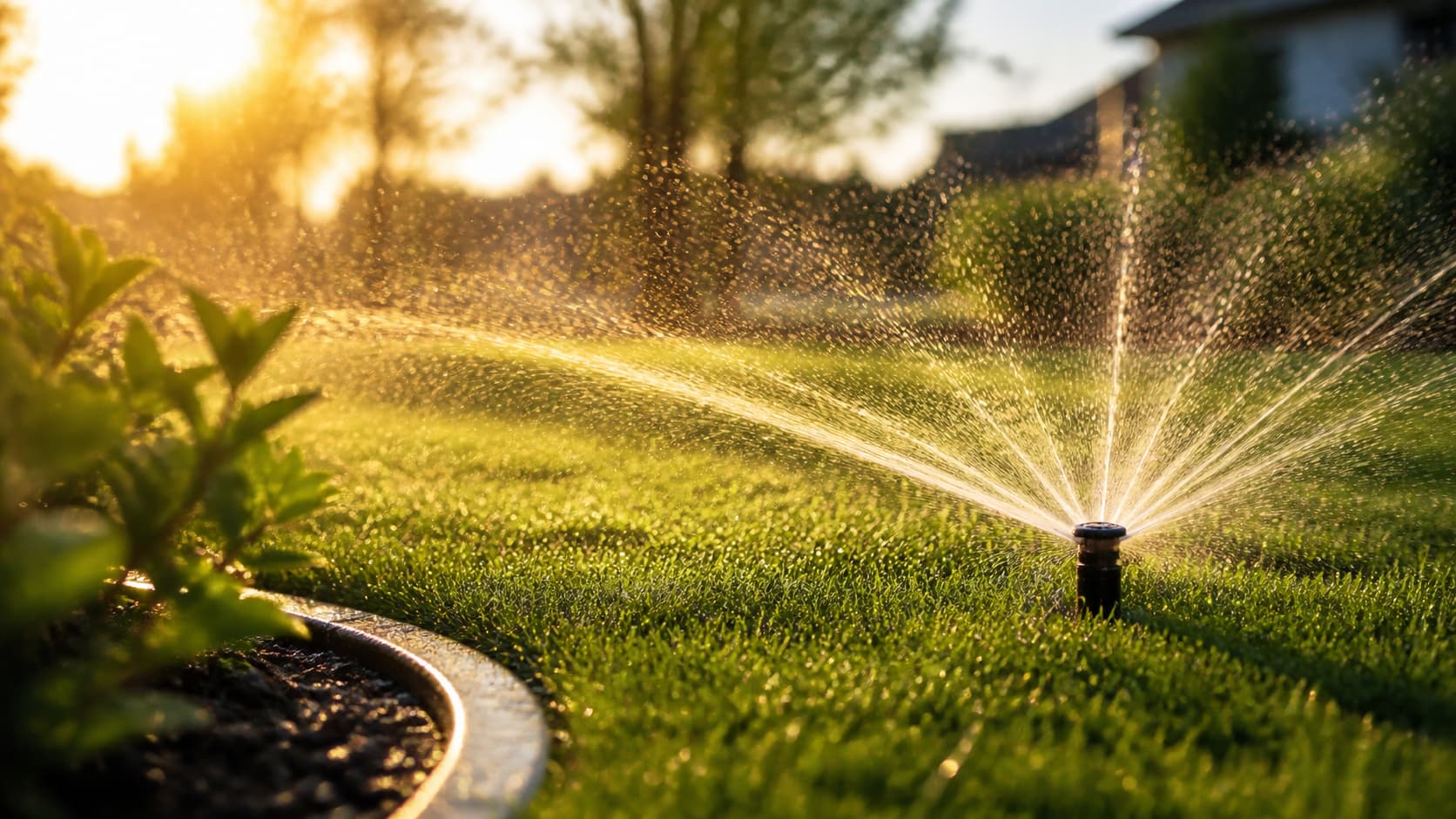
Automatic irrigation is often seen as a comfort purchase. In reality it is an economically sound decision in most cases, especially once you have more than a couple of hundred square metres of lawn and beds.
Time: an hour a day, all summer
Watering an average home garden properly with a hose takes 30 to 60 minutes a day. From early June to late August that adds up to 50 to 80 hours a season. Automation does the same work while you sleep.
Water: up to 40 percent less
With a hose, much of the water is wasted: it evaporates in the midday heat or runs off to where it is not needed. An automatic system waters in the early morning, when evaporation is at its lowest, and gives each zone a precisely dosed amount. A rain sensor skips the cycle when nature has already done the job.
Plant health
Uneven watering is the main reason lawns go patchy and hedges grow unevenly. Drip irrigation delivers water straight to the roots and keeps the leaves dry, which also reduces the risk of fungal diseases.
When it does NOT pay off
If your garden is small, the watered area is under a hundred square metres and you are mostly at home in summer, a good hose and a tap timer are perfectly sufficient.
Want to know what automation would cost for your garden? We do the calculation for free: we measure the zones and give you a concrete price.